 Day tour
Season: Year-round
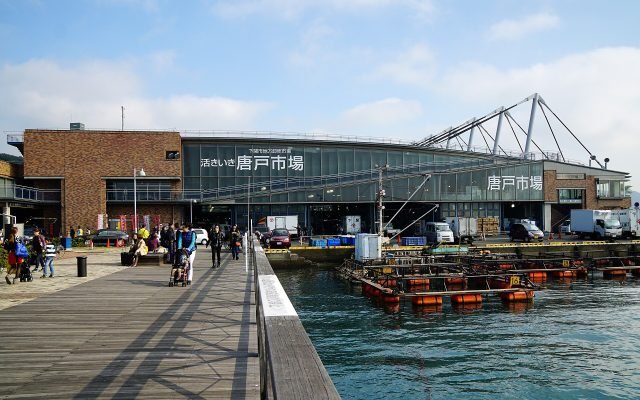
Shimonoseki and Karato Market tour
- Eat fresh sushi at Karato Market on the strait
- See Akama Shrine and the Kanmon Strait
Food and drink
With two coasts and fertile valleys, Yamaguchi eats very well. It is the home of Japan’s most famous fugu market, an unusual noodle dish cooked on a roof tile and some of the country’s best-known sake. Here is what to try.
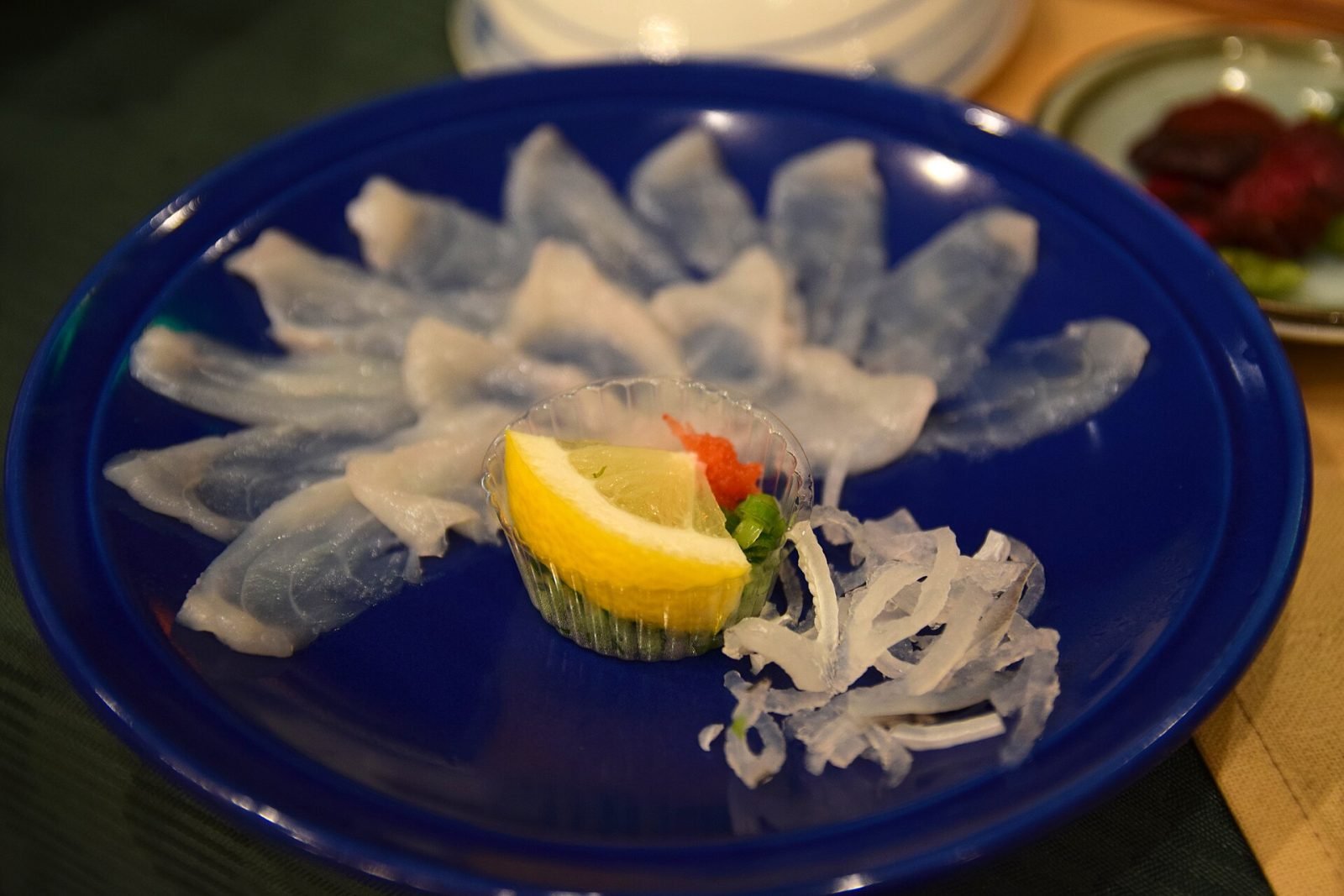
Fugu, or pufferfish, is Yamaguchi’s most famous food, and Shimonoseki is its capital: most of Japan’s fugu passes through the city’s market. Locals call it fuku, which sounds like the word for good fortune. The fish contains a deadly poison, so it may only be prepared by chefs with a special licence, and at licensed restaurants it is perfectly safe.
Fugu is in season from about autumn to early spring, and at its best in winter. A full fugu course is not cheap, but it is a memorable experience.
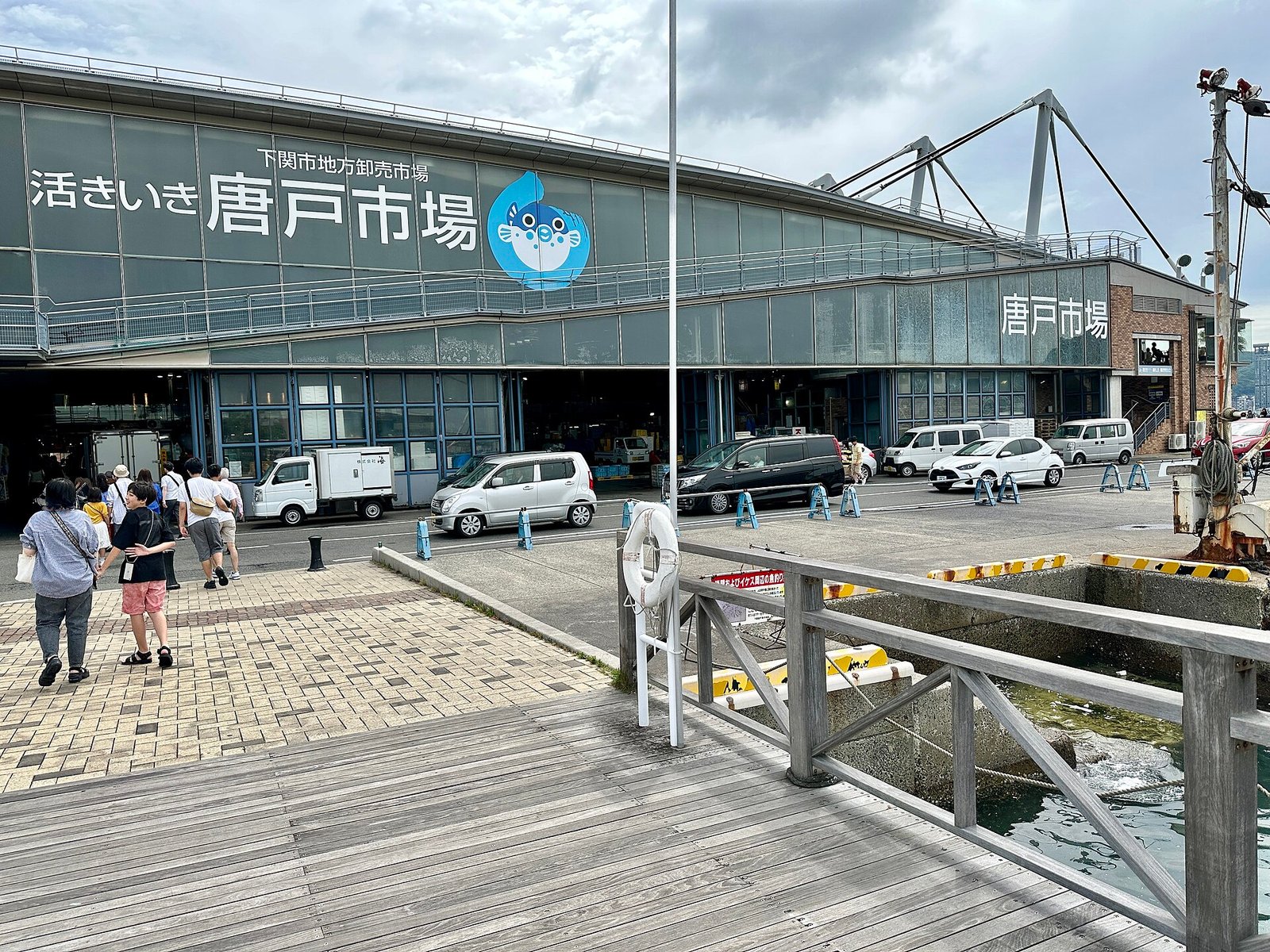
On Fridays, weekends and holidays, stalls inside Karato Market in Shimonoseki sell fresh sushi, including fugu, by the piece. Pick what you like and eat it on the waterfront boardwalk, watching ships pass through the Kanmon Strait.
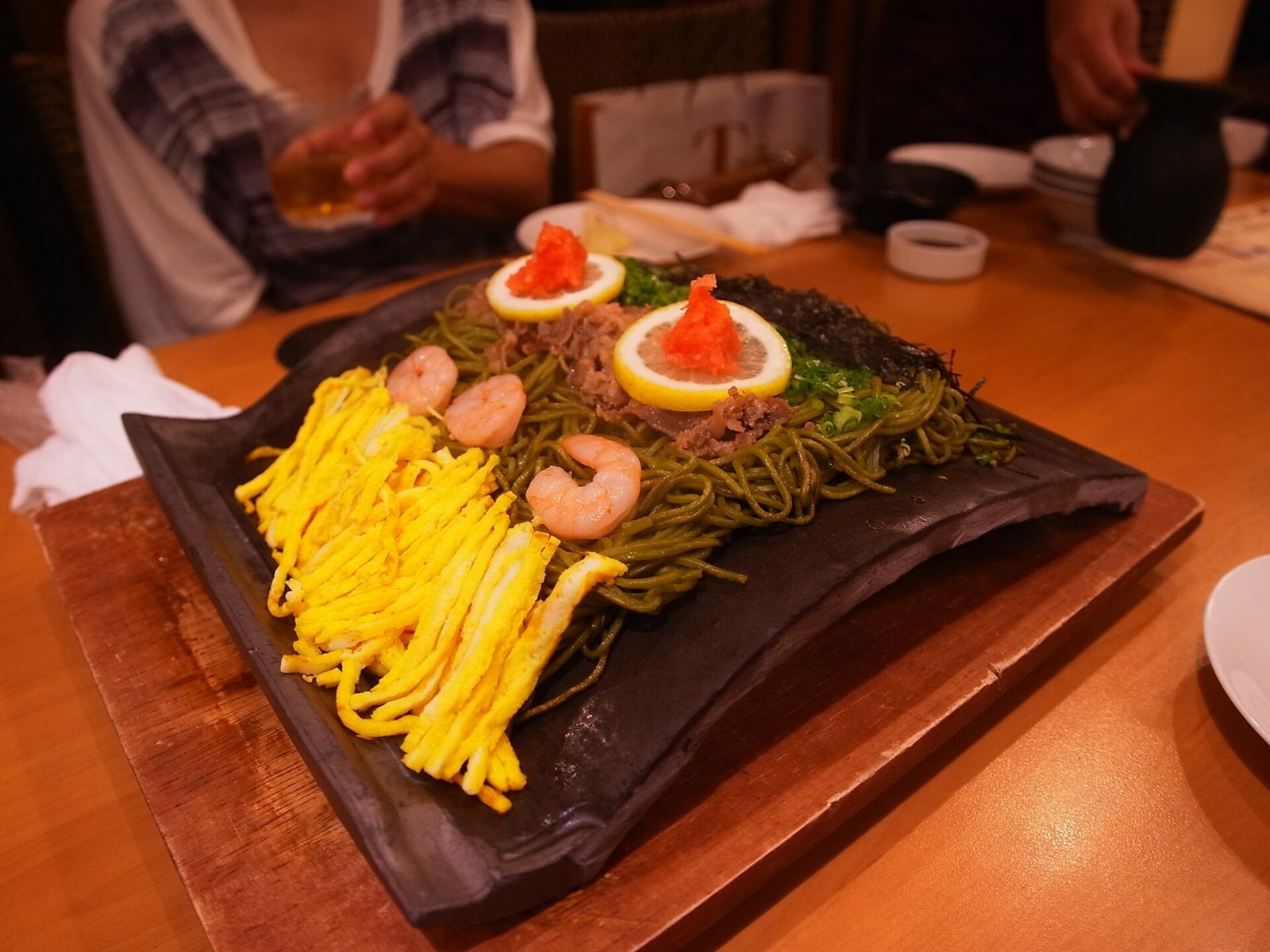
Kawara soba is green tea soba noodles served sizzling on a hot clay roof tile, topped with sweet beef, shredded egg, seaweed, lemon and grated radish, and dipped in a warm broth. The noodles crisp up where they touch the tile. It was created at Kawatana Onsen, in the north of Shimonoseki, inspired by a story that soldiers in the 1870s cooked on roof tiles. You can find it across the prefecture.
A pressed sushi from Iwakuni, made in large wooden frames with layers of vinegared rice, fish, shredded egg, lotus root and shiitake, then cut into squares. It is said to have been created for the Kikkawa lords, and is found in restaurants near Kintaikyo Bridge.
Natsumikan, a large, tart summer orange from Hagi, is made into marmalade, candied peel, juice and soft-serve ice cream. Yamaguchi uiro, a soft, chewy sweet made from bracken starch and red beans, is a classic souvenir from Yamaguchi city.
Yamaguchi has become one of Japan’s most exciting sake regions. Dassai, from a brewery in the hills of Iwakuni, is famous around the world for its delicate junmai daiginjo, and breweries such as Toyo Bijin in Hagi and Gangi in Iwakuni are also highly rated. Look for local sake at izakaya, and for tastings at breweries and shops.
Book ahead
Day tour
Season: Year-round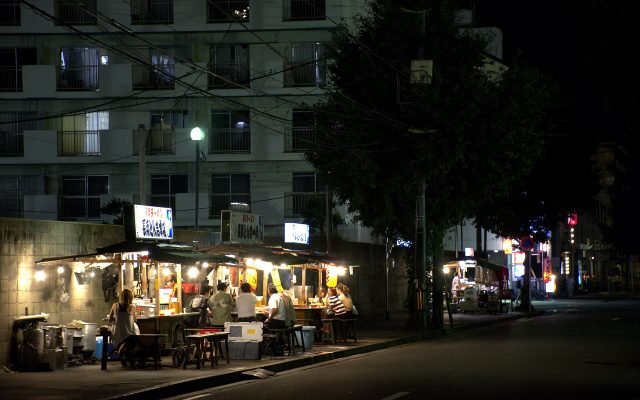 Food tour
Season: Year-round
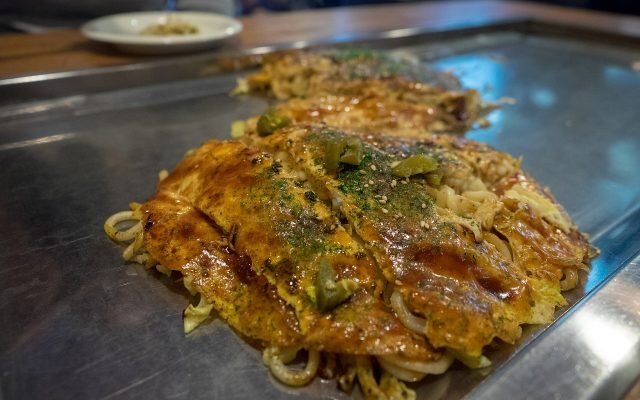 Food tour
Season: Year-round
Keep reading
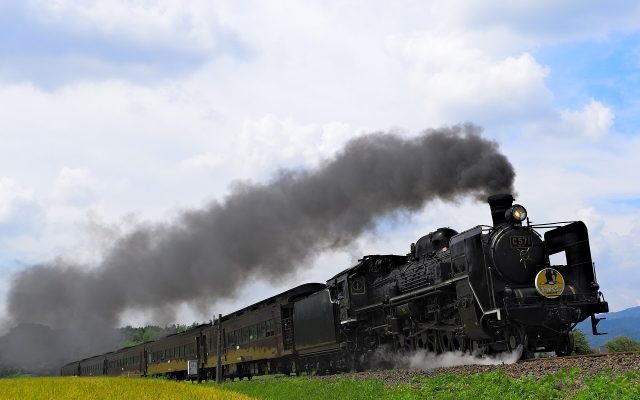 Practical
How to get around Yamaguchi Prefecture: the shinkansen and local trains, buses to Akiyoshidai and Hagi, hiring a car for the north coast, rail passes and the SL Yamaguchi steam train.
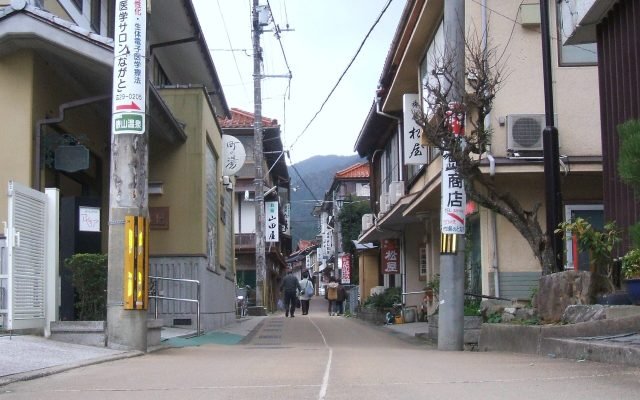 Hot springs
A guide to Yamaguchi’s hot springs: Yuda Onsen and its white fox, riverside Nagato Yumoto, the healing waters of Tawarayama, Kawatana Onsen and onsen etiquette.
 Day trips
A road trip along Yamaguchi’s Sea of Japan coast: Hagi, Omijima, Higashi-Ushirobata rice terraces, Motonosumi Shrine, Tsunoshima Bridge and on to Shimonoseki.