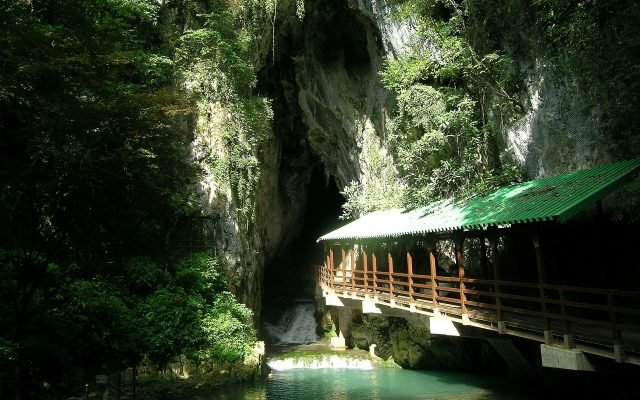
 Day tour
Season: Year-round
Akiyoshido Cave and Akiyoshidai day tour
- Walk through one of Japan’s largest limestone caves
- Many tours add Motonosumi Shrine; check whether cave entry is included

Karst & cave
Akiyoshidai is Japan’s largest karst plateau, a sweep of grassy hills covered in thousands of grey-white limestone pillars, formed from an ancient coral reef. Deep beneath it lies Akiyoshido, one of the largest limestone caves in Japan, with a walkway of about 1 km through vast halls, rimstone pools and towering formations.
About 350 million years ago, this area was a coral reef in a warm sea. Over time, the reef turned to limestone, was lifted up into the hills, and was slowly dissolved by rain, leaving the strange landscape of rocks and sinkholes on the plateau and the great cave below. Together they make one of the most unusual natural sights in western Japan, and an easy half day from Yamaguchi city.
The walkway is paved and lit, and an elevator at the far end connects the cave to the plateau above, so you can walk through and come out on top. Read our guide to Akiyoshido Cave and Akiyoshidai.
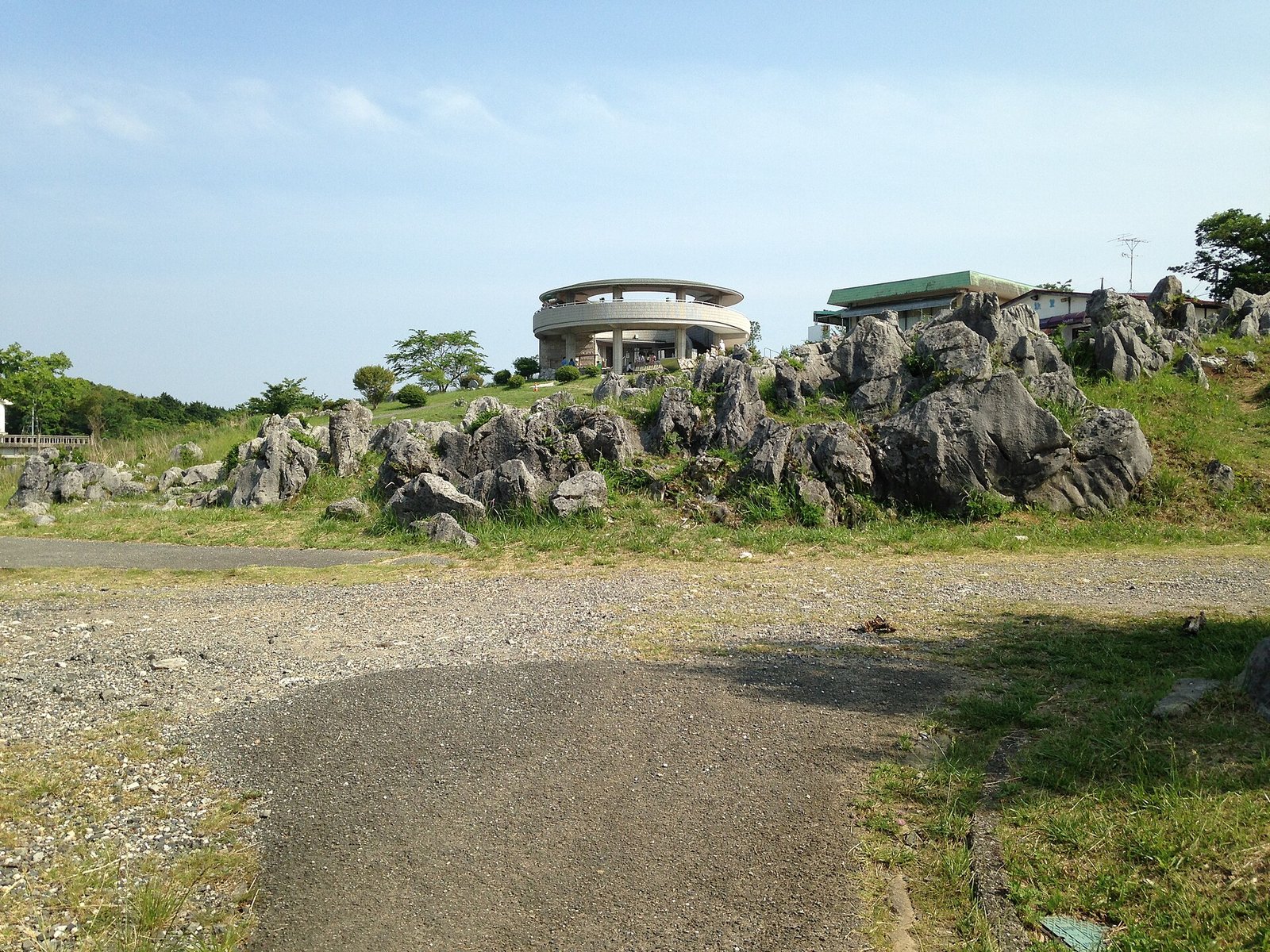
From the Karst Observation Deck, paths lead out across the grassland among the rocks and sinkholes. The views are wide and open, especially in autumn, when the pampas grass turns silver and gold. Each February, the grass is burned off in a spectacular controlled fire called yamayaki.
Book ahead
Day tour
Season: Year-round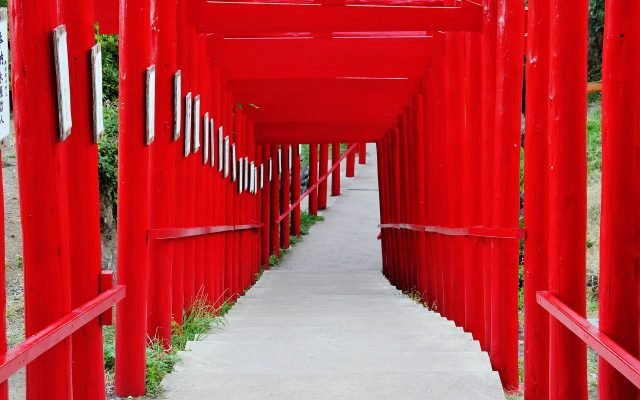 Day tour
Season: Year-round
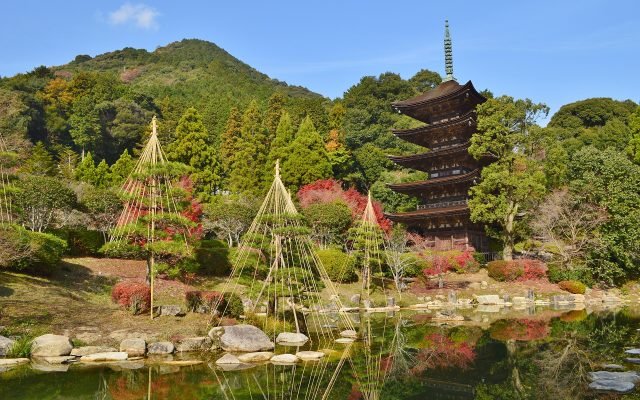 Private tour
Season: Year-round
Nearby
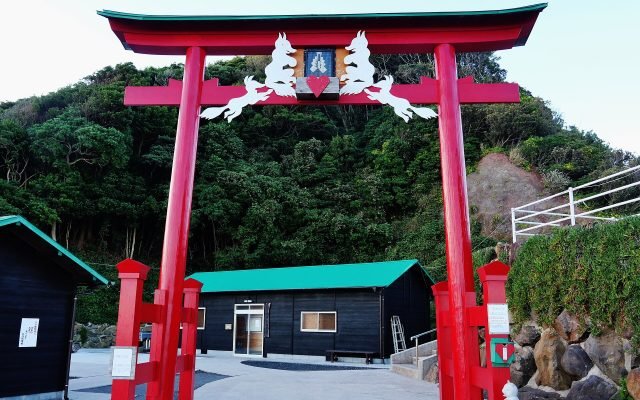 Shrine
123 red torii above the sea
A line of 123 red torii gates winding down a green clifftop to the Sea of Japan, with an offering box set high on a gate that you try to throw a coin into.
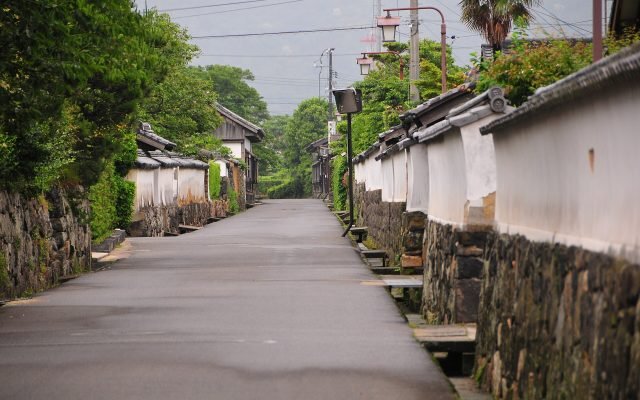 Castle town
Samurai lanes and Hagi ware
The old castle town of the Mori lords on the Sea of Japan, with samurai houses, earthen walls, the school of Yoshida Shoin and the famous Hagi ware pottery.
 City
Fugu, a fish market and the strait
The port city at the western tip of Honshu, famous for fugu, Karato fish market and its sushi stalls, Akama Shrine and the walk under the sea to Kyushu.